ContactDEEN
Discuss your ambitions

Communication

Nonverbal communication

Voice, gaze, gesture and physical presence influence a conversation. Learn to manage your own communication more deliberately and interpret observations with appropriate care. Practical exercises are paired with a critical approach to simplistic claims. Context, cultural differences and individual habits matter: body language is not a dependable method of detecting whether someone is lying.

Request information

YOUR PROGRAMME AT A GLANCE

For individuals & organisations
Start date
Choose your start date

We agree a start that fits your professional and personal commitments.

Programme duration
3, 7 or 12 months

OSAM certificates: according to your starting level and learning goals. Company group programmes are usually planned in days or half-days.

Learning format
In person or live online

Synchronous teaching. Both formats include the OSAM platform for course materials and organisational information.

Qualifications
OSAM certificate

From an eduQua-certified institution.

Fees
Contact us

An individual quotation confirms the programme, delivery format and applicable fees.

Expert practitioners
High-level professional experience

Highly personalised teaching with experienced practitioners working at a high professional level.

FROM KNOWLEDGE TO CAPABILITY

What you will be able to do.

For advisers, managers, HR, sales professionals, educators and anyone seeking to improve their presence in conversations or presentations. The focus is attentive communication and observable feedback, rather than diagnosing personality, intentions or psychological conditions.

  • Keep observation separate from interpretation.
  • Use voice, posture and gesture appropriately.
  • Account for cultural and individual differences.
  • Clarify uncertainty through respectful questions rather than assumptions.

YOUR LEARNING JOURNEY

A structured programme. Room for your priorities.

These modules form the core programme. Where useful, we refine the emphasis, examples and learning activities to reflect your professional context, starting point and objectives.

01

Channels and limits of nonverbal communication

Examine facial expression, gesture, posture, gaze and voice alongside spoken content. Use examples to distinguish description from interpretation. Treat ambiguous signals as uncertain, develop alternative explanations and check context rather than assuming that one movement reveals a person's intention.

02

Perception and personal assumptions

Explore how expectations, prior knowledge and first impressions shape what you notice. Exercises help identify premature conclusions. Describe behaviour precisely and compare feedback instead of assigning meaning to isolated movements or categorising people through supposed personality signals.

03

Voice, posture and presence

Experiment with pace, volume, pauses and posture appropriate to the occasion. Reflect on their effect against specific communication goals. Aim for an authentic presence that supports understanding and connection without forcing artificial gestures or following rigid rules of performance.

04

Interaction and relationships

Practise attentive listening, conversational turn-taking and appropriate distance. Consider the setting, your role and personal boundaries. When a signal remains unclear, use open questions and summaries rather than claiming certainty about another person's internal state or attitude.

05

Culture and online communication

Reflect on differences in eye contact, gesture, proximity and pauses without reinforcing cultural stereotypes. For online conversations, assess framing, sound and the limited range of visible cues. Adapt your interpretation to the information actually available rather than filling gaps with assumptions.

06

Observation and workplace application

Observe selected behaviours during a conversation or presentation and provide descriptive feedback. Assess together whether the intended effect is apparent. Create a personal practice plan focused on a few concrete changes that can be tested in everyday professional interactions.

THE PEOPLE BEHIND YOUR PROGRESS

Expertise, with a personal connection.

Educational direction, subject expertise and adult learning support. Your final trainer assignment is confirmed in your proposal.

Simon Pawolleck

DIRECTOR’S PERSPECTIVE

Simon Pawolleck

Managing Director

Simon Pawolleck provides OSAM’s overall direction. The focus is on relevant skills, a clear learning structure and personal support that connects professional ambitions with practical progress.

Matthieu Wildhaber

EXPERT’S PERSPECTIVE

Matthieu Wildhaber

Communication expert

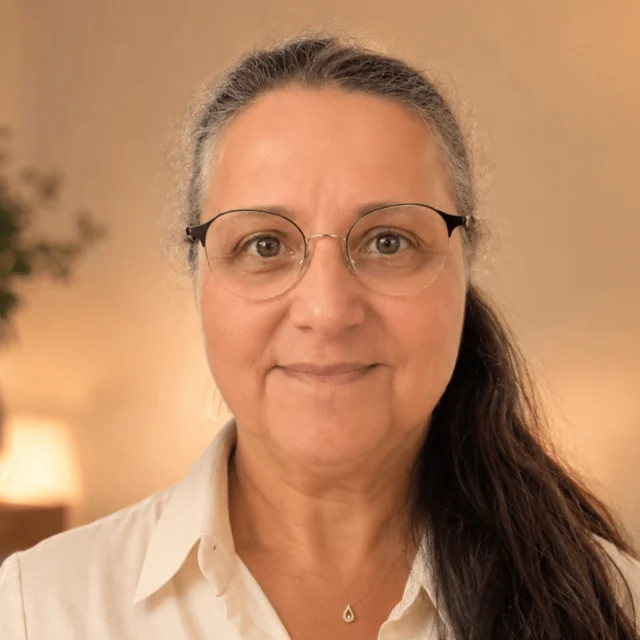
Matthieu Wildhaber brings the programme’s subject expertise into focus. The educational approach connects a structured foundation with practical situations, relevant exercises and feedback aligned with your professional objectives.

Sandrine Mélé

ADULT LEARNING & ANDRAGOGY

Sandrine Mélé

Head of Adult Learning

Federal Diploma of Higher Education in Adult Education

Sandrine Mélé oversees the adult learning approach: coherent progression, active participation and learning methods that take account of prior experience. She supports a structured, practical and human approach to developing competence.

300+

Expert practitioners

Active at a high professional level, selected against demanding criteria.

700+

Companies supported

Developing the skills of their employees with OSAM.

4.8/5

Learner satisfaction

An experience centred on the people who learn with us.

Individuals & companies

Personal career goals. Shared organisational priorities.

eduQuaSERI / SEFRI

eduQua-certified institution. Federal qualifications listed by SERI in selected pathways.

GOOD TO KNOW

Your questions, answered.

Who is this programme for?

For advisers, managers, HR, sales professionals, educators and anyone seeking to improve their presence in conversations or presentations. The focus is attentive communication and observable feedback, rather than diagnosing personality, intentions or psychological conditions. The programme is available to private individuals and organisations, including company teams. OSAM welcomes learners living or working in Switzerland as well as international participants joining live online.

How is this qualification recognised?

OSAM is an eduQua-certified continuing education institution. An OSAM certificate documents the learning agreed for your programme; eduQua is a quality label for the institution, not federal recognition of every individual course.

OSAM’s work connects individual professional development with the needs of companies in Switzerland and internationally. Client references and learner reviews below offer a practical view of that work.

What are the benefits of this programme?

You develop skills you can apply in real situations, with guidance from experienced practitioners and access to learning materials on the OSAM platform. The programme focuses on these outcomes:

  • Keep observation separate from interpretation.
  • Use voice, posture and gesture appropriately.
  • Account for cultural and individual differences.
  • Clarify uncertainty through respectful questions rather than assumptions.
Can the programme be personalised?

Yes. We start with the established programme and refine the emphasis, practical cases and learning support where useful. Adjustments take account of the individual or company’s professional context, existing skills and goals. The agreed programme is confirmed before enrolment; federal examination requirements remain binding where applicable.

What are the entry requirements?

For the OSAM certificate, contact us to review your current level, prior experience and objectives. We will confirm the appropriate entry requirements and any recommended preparation.

Will I learn to detect lies from body language?

No. Individual gestures, eye movements or expressions do not establish reliably whether someone is lying. Training promotes careful observation, contextual understanding and clarifying questions.

Do I have to be recorded on camera?

No. Recording may be useful by agreement and with consent, but is not required. Observation exercises and specific feedback can be provided without video.

Is this useful for international teams?

Yes. Different communication habits are explicitly considered. Learn to discuss differences openly rather than immediately interpreting behaviour as agreement, rejection or disrespect.

YOUR CAREER, IN PERSPECTIVE

Where could these skills take you?

Depending on your experience and qualifications, this subject can support development in the following professional directions.

Explore Swiss salaries on Salariostat
  • Customer adviser
  • HR specialist
  • Trainer or facilitator

Access to a profession depends on your experience and on any qualifications or authorisations required for the role.

YOUR NEXT STEP

Your ambitions. Our starting point.

Tell us where you want to go. Together, we will define the learning journey that gets you there.

info@osam-academy.com+41 31 528 01 28
OSAM+
No obligation. We use your details to respond to your enquiry. Privacy notice